

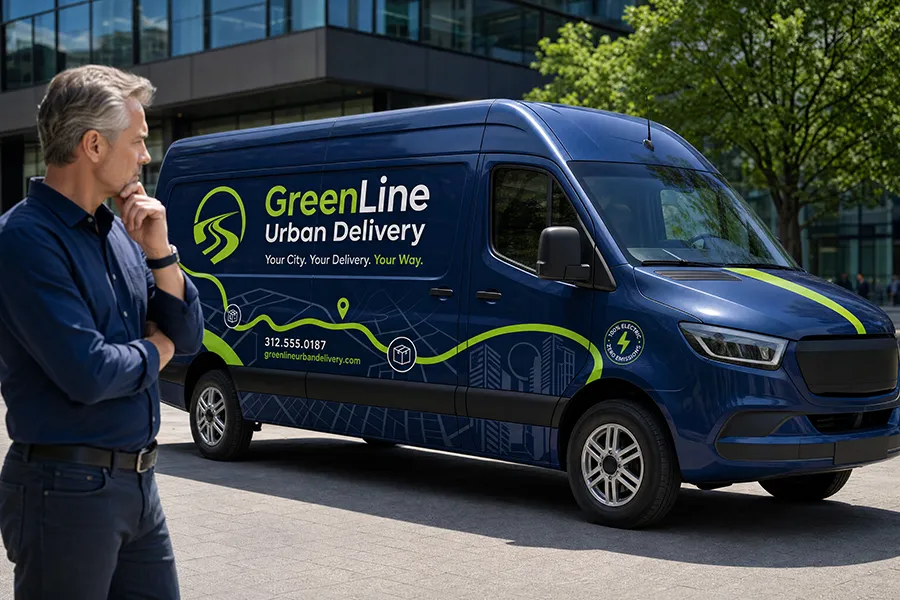
Moving to electric vehicle fleets can seem relatively simple at first. Replace the vehicles, install chargers, and start reducing fuel use. Once those vehicles are actually on the road every day, however, fleet managers often discover that the transition changes much more than the fuel source.
Charging needs to work around daily schedules, while range can vary depending on routes, driving conditions, and vehicle use. Drivers need to develop new habits, and maintenance starts to look different. Even something as familiar as planning fleet graphics deserves attention because an electric vehicle may have different body contours, sensors, charging ports, and surface considerations. None of these issues make electric vehicle fleets impractical. They simply mean that managing them requires a different approach.
Why Managing an Electric Fleet Requires New Thinking
A conventional fleet usually comes with years of operational knowledge. Managers understand fuel costs, maintenance intervals, route requirements, and vehicle replacement cycles.
EVs change some of those familiar patterns. The companies getting the most from electric fleet vehicles are therefore looking beyond the vehicles themselves and considering the complete operation around them.
Charging Has to Work Around the Fleet
Charging is one of the first practical questions for customers. It is not enough to install several chargers and assume every vehicle will be ready the next morning. Managers need to know when vehicles return, how long they remain parked, how much energy they require, and when they need to leave again.
A fleet with predictable overnight parking will have different charging needs from vehicles that operate across multiple shifts. Planning around actual schedules helps avoid situations where several vehicles need charging at the same time, or a driver begins a route without sufficient range.
Real-World Range Is Not Always the Same
The stated range of an EV provides a useful reference, but everyday operations introduce variables. Weather, traffic, driving style, vehicle load, speed, and heating or air-conditioning use can influence energy consumption.
A route that works comfortably one day may leave less of a buffer under different conditions. Instead of building schedules around maximum advertised range, fleet managers can study real trip data and leave reasonable flexibility in daily routing.
Maintenance Changes Rather Than Disappearances
Electric vehicles have fewer conventional engine components, but they are certainly not maintenance-free. Tires, brakes, suspension, cooling systems, cabin filters, software, and other components still require attention.
Tire wear can be particularly important because vehicle weight, torque, mileage, and driving behavior all affect how often tires need to be replaced. A good EV fleet maintenance program should therefore be based on the requirements of the vehicles being operated rather than simply adapting an old gasoline-vehicle checklist.
Building a More Practical EV Fleet Strategy
The most effective approach is to treat electrification as an operational change rather than simply a vehicle purchase. Before expanding electric vehicle fleets, businesses can review daily mileage, parking time, charging access, route predictability, maintenance requirements, driver needs, and branding standards. Not every route necessarily needs to transition at the same time.
Starting with vehicles whose schedules suit electric operation can provide useful information before the fleet grows. An EV fleet management system can then help managers track vehicle performance, charging activity, energy use, and maintenance needs. While a dedicated EV fleet maintenance plan keeps servicing based on their actual requirements.
Frequently Asked Questions
What is the biggest challenge when managing electric fleet vehicles?
Charging and route planning are often among the biggest adjustments. Managers need to consider daily mileage, charging time, vehicle availability, and real-world energy consumption rather than relying only on the vehicle’s stated range.
How is EV fleet maintenance different from conventional fleet maintenance?
EVs do not require many traditional engine-related services, but tires, brakes, suspension, cooling components, software, and other systems still need attention. Maintenance schedules should follow the requirements of each EV model and its actual operating conditions.
What does an EV fleet management system do?
An EV fleet management system can help businesses monitor information such as vehicle usage, charging, routes, mileage, and energy consumption. Bringing this information together makes it easier to identify patterns and make operational decisions.
Can electric fleet vehicles still be branded with vehicle graphics?
Yes. Electric fleet vehicles can be branded, but graphics should be planned around the dimensions and functional features of each model. Thomas Printworks offers vehicle graphics as part of its broader print solutions for businesses.
Conclusion
Managing electric vehicle fleets successfully requires more than switching from fuel to charging. Route planning, charging schedules, driver habits, and EV fleet maintenance all need to work together to keep vehicles reliable and daily operations running smoothly. For businesses, maintaining consistent fleet branding is equally important as new electric models are added.
Connect with Thomas Printworks to explore professional vehicle graphics for a fleet built to represent your business wherever it goes.